





















At Sewing House, we often find that curtain linings are one of the most important yet overlooked parts of a well-designed window treatment. While the face fabric usually takes centre stage, the lining plays a crucial role in how your curtains perform, how they hang and how long they last.
Choosing the right lining can influence everything from light control and insulation to the overall drape of your curtains. Whether you want a softly filtered glow in a living room or complete darkness in a bedroom, the lining you select can transform your made-to-measure curtains from purely decorative to highly functional.
This guide explains how curtain linings work and how to choose the right option for your home.
What Are Curtain Linings
Once you have selected your curtain fabric, the lining is the layer added to the back of the curtain. At Sewing House, this lining is carefully sewn behind the face fabric to enhance performance and durability.
Although it sits out of sight, the lining has a significant impact on how the curtain behaves. It protects the face fabric from sunlight, helping to reduce fading over time. It also adds structure and weight, allowing the curtains to hang more smoothly and maintain a tailored appearance.
Most importantly, curtain linings allow you to control how your curtains manage light, temperature and privacy. By choosing the right lining, you can ensure your curtains work perfectly for the room they are in.
How Curtain Linings Work
Curtain linings improve performance in several ways. The additional layer adds weight, helping the curtains fall into soft, elegant folds rather than appearing thin or flat. This creates the polished look typically associated with professionally made curtains.
Linings also help protect the decorative fabric from prolonged exposure to sunlight. Without a lining, strong daylight can gradually fade colours and weaken delicate materials.
Different lining types introduce additional benefits. Blackout linings prevent light from entering the room, thermal linings help retain warmth and reduce draughts, and heavier interlinings can soften outside noise while adding luxurious depth to the curtain.
Not every curtain requires a lining. Lightweight fabrics such as voiles and sheers are often designed to remain unlined so that natural light can pass through freely.
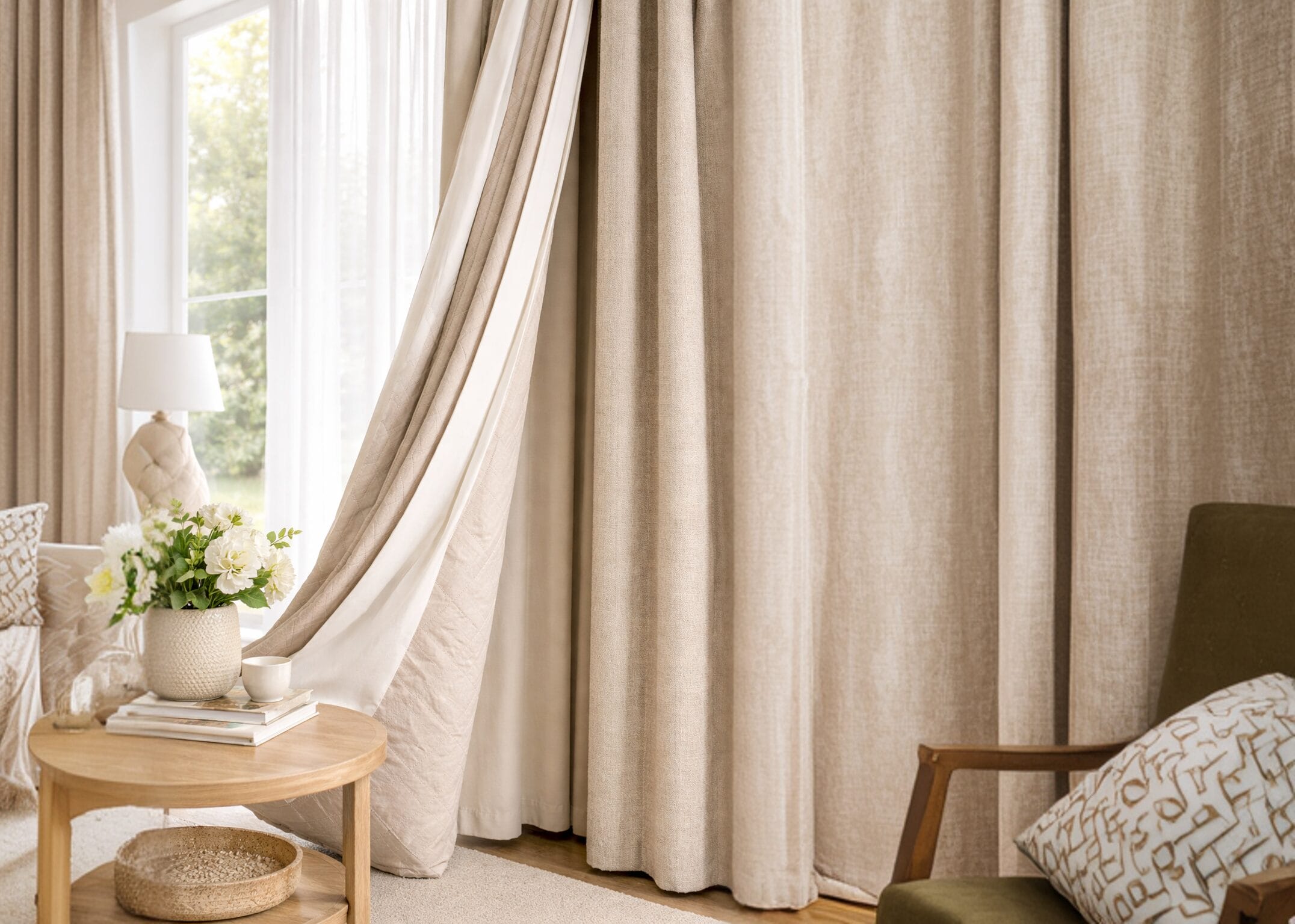
Types of Curtain Linings Available
At Sewing House, we offer a range of curtain linings so that each set of curtains can be tailored to suit the needs of the room.
Standard Lining
Standard lining is the most commonly used option and offers an excellent balance between practicality and elegance. Typically made from a durable polycotton twill fabric, this lining adds structure while helping protect the face fabric from dust and sunlight.
Standard lining gently reduces incoming light without creating a dark room, making it a popular choice for living rooms, dining rooms and spaces where maintaining natural light is important.
Because it improves the drape of the curtain while remaining relatively lightweight, it is often selected for decorative fabrics and patterned designs.
Thermal Lining
Thermal lining is designed to improve insulation. It contains a specialised backing that helps create a barrier between the window and the room, trapping a layer of still air that helps reduce heat loss.
This can make a noticeable difference in colder months, particularly in homes with older windows or draught-prone areas such as doors or bay windows.
While not fully blackout, thermal lining also reduces more light than a standard lining, providing a comfortable balance between brightness and insulation.
Blackout Lining
Blackout lining is ideal for rooms where controlling light is essential. This lining prevents the majority of incoming light from passing through the curtain fabric, creating a darker and more restful environment.
Bedrooms are the most common setting for blackout curtains, particularly for light-sensitive sleepers or people who work night shifts. They are also useful in media rooms where screen glare needs to be reduced.
In addition to blocking light, blackout linings can help regulate temperature and protect furnishings from prolonged sun exposure.
Interlining
Interlining is the most luxurious curtain lining option. Positioned between the face fabric and the main lining, it creates a thicker, more substantial curtain with a beautifully full drape.
This extra layer improves insulation and also helps soften external noise, making the room feel quieter and more comfortable. Interlined curtains are often chosen for formal living rooms and bedrooms where a rich, elegant appearance is desired.
The added weight of interlining gives curtains a particularly refined finish and enhances the overall look of high-quality fabrics.

Unlined Curtain Fabrics
Not every curtain requires a lining. Some fabrics are intentionally designed to remain unlined in order to preserve their lightweight appearance.
Voile Curtains
Voile and sheer fabrics are made to allow light to pass through. These delicate materials create a soft, airy effect that gently diffuses daylight while still maintaining a degree of privacy.
Voile curtains are especially popular in contemporary interiors with large windows or garden-facing doors where homeowners want to maximise natural light.
They are often layered behind heavier curtains to create a flexible window treatment that works throughout the day.
Blackout Fabrics Without Lining
Some fabrics are manufactured with blackout properties built directly into the material itself. These fabrics block light without requiring an additional lining layer.
This can create a lighter curtain while still delivering excellent light control, making them particularly useful for bedrooms or media rooms.
The Benefits of Curtain Linings
Curtain linings provide several practical advantages that go beyond appearance.
They allow you to manage natural light more effectively, whether by softening glare or blocking light entirely. They improve insulation, helping rooms stay warmer in winter and cooler during summer months. Heavier linings can also reduce external noise, making interiors feel calmer and more comfortable.
From a design perspective, linings enhance the drape and structure of curtains, ensuring they fall smoothly and maintain a tailored appearance.
Choosing the Right Lining for Each Room
Different rooms benefit from different lining types, depending on how the space is used.
Bedrooms typically benefit from blackout linings, which create a darker environment that supports restful sleep.
Living rooms often work best with standard lining or interlining, providing structure and warmth without blocking natural light completely.
Kitchens and light-filled spaces are often suited to voile curtains, which maintain brightness while offering privacy.
Rooms with older windows or noticeable draughts can benefit from thermal lining, which helps improve insulation and energy efficiency.

Made-to-Measure Curtains with the Right Lining
At Sewing House, every pair of curtains is made to measure and tailored to your specific requirements. This allows us to combine your chosen fabric with the most suitable lining to ensure the curtains perform as beautifully as they look.
Whether you are prioritising light control, insulation or a luxurious drape, selecting the right lining ensures your curtains will enhance your space for years to come.
With thoughtful fabric choices and the right lining combination, made-to-measure curtains become far more than decorative features. They become an integral part of creating a comfortable, balanced and beautifully finished interior.