






















Open plan living demands a careful balance between light, privacy and cohesion. Large expanses of glass flood the space with natural daylight, but without the right window treatments, rooms can feel exposed, overheated or visually unbalanced.
Airy window treatments help soften light, enhance flow and maintain a sense of calm across connected living, dining and kitchen areas. Here’s how to approach open plan spaces, along with suggested product placeholders to guide your collection.
Prioritise Light Without Losing Control
Open plan rooms often feature wide patio doors, bi-folds or tall windows. The goal is to preserve brightness while avoiding glare and harsh shadows.
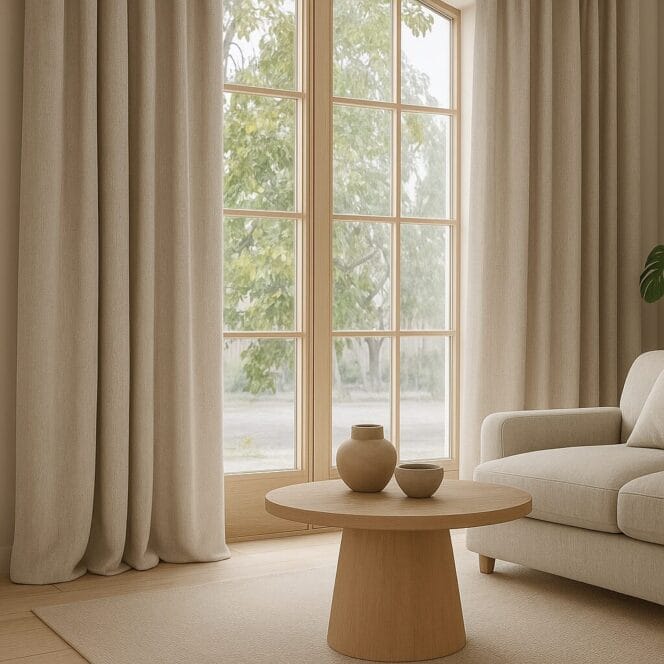
Sheer fabrics and lightweight linens are ideal for maintaining that light, airy feel. They allow daylight to filter gently while softening the overall aesthetic.
These curtains should create fluidity across the space, enhancing the sense of height and openness.
-

Rustic Oyster Curtains
Select optionsFrom: £151.22 -
Peony & Sage Brushed Linen Vanilla Pod Curtains
Select optionsFrom: £400.80 -
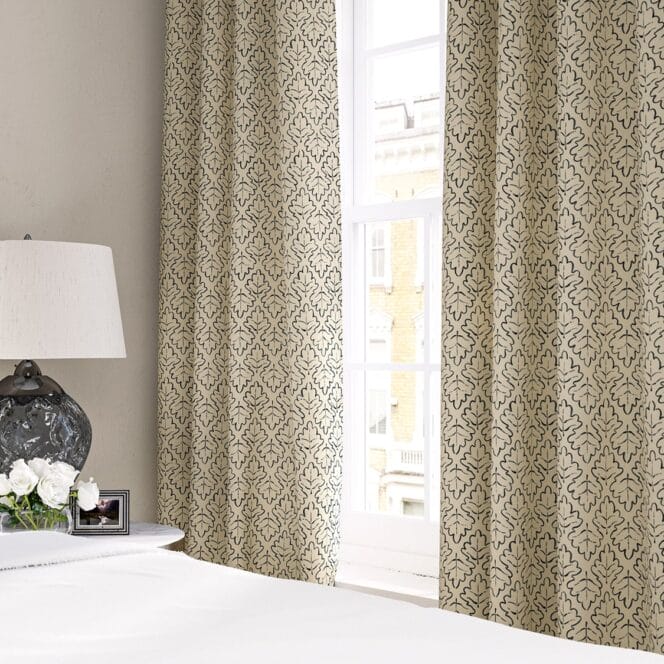
Linwood Maze Midnight Curtains
Select optionsFrom: £305.60 -
Villa Nova Artesia Alpine Curtains
Select optionsFrom: £173.46 -
Axel Frost Curtains
Select optionsFrom: £134.24 -
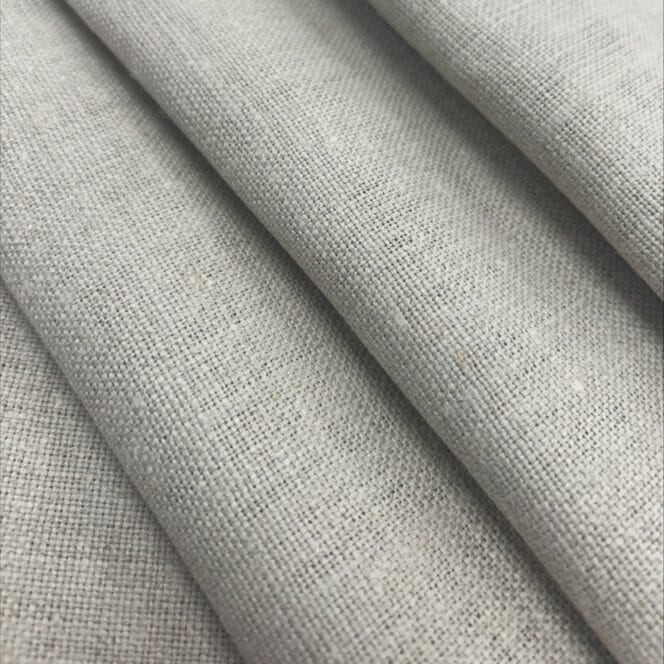
Rustic Parchment Curtains
Select optionsFrom: £151.22 -
Peony & Sage Brushed Linen Stone Curtains
Select optionsFrom: £400.80 -
Peony & Sage Grainsack Linen Curtains
Select optionsFrom: £400.80



Layer for Flexibility
Open plan spaces serve multiple purposes throughout the day. Layering allows you to adapt to changing light conditions while maintaining a cohesive look.
Pairing sheer curtains with heavier made-to-measure curtains adds depth without heaviness. During the day, sheers diffuse sunlight. In the evening, the main curtains provide privacy and warmth.
This approach ensures flexibility while keeping the aesthetic light and refined.
Maintain Visual Flow Across Zones
In open plan interiors, continuity is key. Window treatments should complement adjoining areas rather than compete with them.
Roman blinds work particularly well for kitchen or dining windows within the same space. Their structured silhouette offers neatness while the fabric connects visually with the surrounding curtains.
This ensures the space feels unified rather than segmented.
-

Busy Bees Mink Grey Peony & Sage Roman Blind
Select optionsFrom: £121.50 -
Iver Birch Roman Blind
Select optionsFrom: £88.60 -

Mia Rouge & Dove on Stone Linen Peony & Sage Roman Blind
Select optionsFrom: £121.50 -

Georgian Trellis Peony & Sage Roman Blind
Select optionsFrom: £121.50 -
Samora Tundra Roman Blind
Select optionsFrom: £101.50 -
Villa Nova Artesia Alpine Roman Blind
Select optionsFrom: £81.20 -
Ian Mankin Angus Stripe Flax Roman Blind
Select optionsFrom: £92.10 -
Rabbit All Star Peony & Sage Roman Blind
Select optionsFrom: £121.50



Consider Scale and Proportion
In open-plan interiors, windows are often a defining architectural feature. Floor-to-ceiling glazing, wide patio doors and expansive bi-fold systems demand window treatments that match their presence. Curtains that are too narrow, lack fullness or stop short of the floor can appear disproportionate, making the entire room feel visually unbalanced.
Generous fabric is key. Opting for double or even triple fullness ensures curtains have depth and movement rather than looking flat. In larger spaces, this added volume creates softness and prevents the room from feeling stark or echoing.
Positioning also plays a significant role. Mounting curtain poles or tracks higher than the window frame draws the eye upward, enhancing ceiling height. Extending the pole beyond the window width allows curtains to stack neatly at the sides when open, maximising natural light and making the glazing appear wider.
For particularly large expanses, consider:
- Wide-width fabrics to avoid excessive seams
- Carefully matched pattern repeats for continuity
- Interlining for improved drape and structure
When proportion is handled correctly, curtains feel intentional rather than decorative, reinforcing a sense of architectural harmony and understated luxury.
Choose Colours That Reflect Light
Colour choice can dramatically influence how an open plan space feels throughout the day. Because these rooms often receive abundant natural light, selecting shades that reflect rather than absorb that light helps maintain brightness and flow.
Soft sage, muted blush, pale blue and warm neutral tones such as stone, oatmeal and ivory work beautifully in expansive settings. These colours bounce daylight gently around the room, reducing harsh contrasts while enhancing the sense of openness.
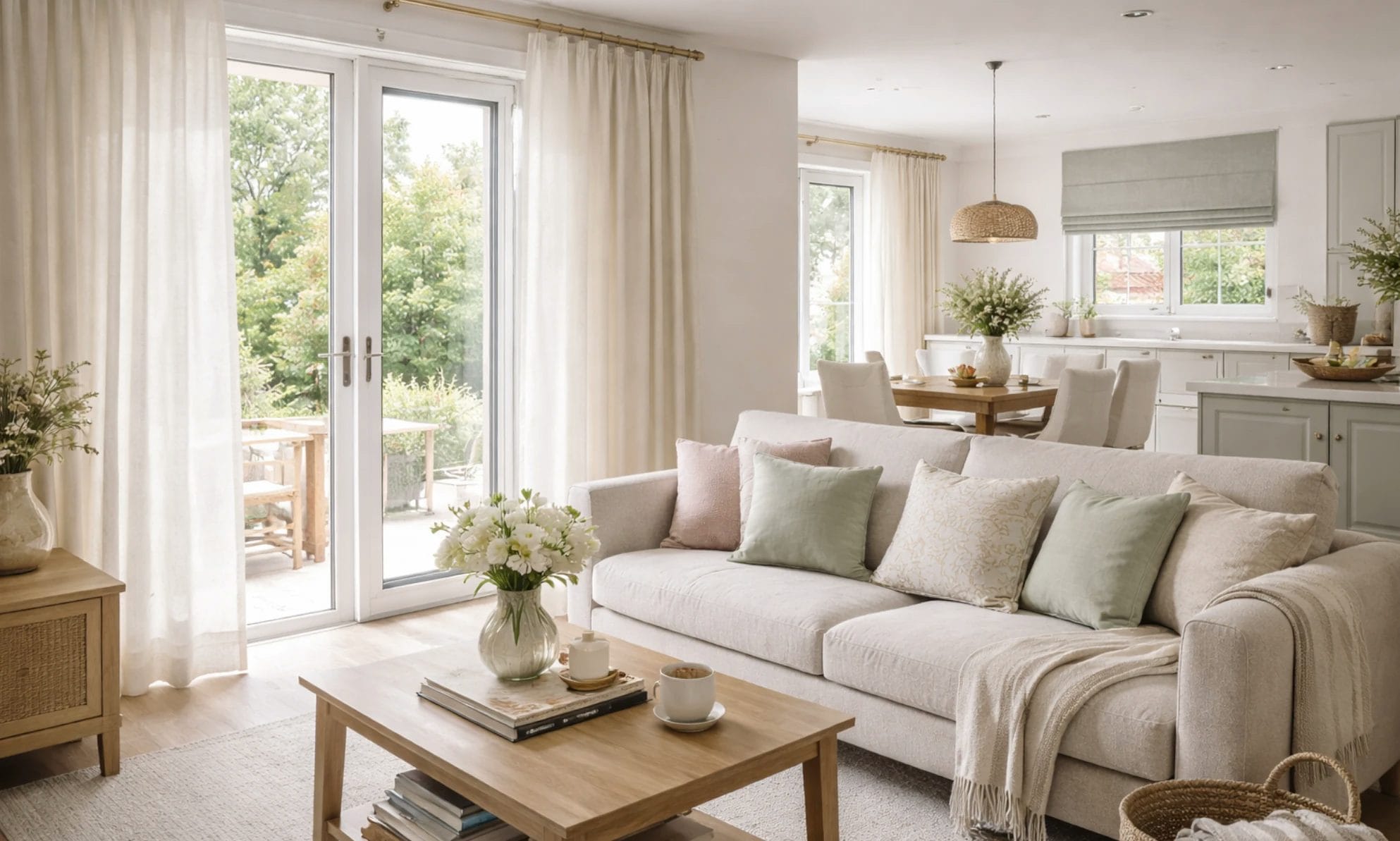
Texture becomes particularly important in lighter schemes. Brushed linens, woven cottons and subtle botanical prints introduce depth without adding visual heaviness. A textured neutral reads softer and more layered than a flat plain, creating interest while remaining refined.
In open plan layouts, it is also helpful to think about visual continuity. Coordinating curtain and blind fabrics in complementary tones ensures that kitchen, dining and living zones feel connected rather than disjointed. Even subtle shifts in tone, for example, sage in one area and stone in another, can maintain harmony while adding dimension.
By choosing colours that enhance natural light, you preserve the airy quality that makes open-plan living so appealing.
Balance Comfort and Efficiency
Although open plan spaces are designed to feel expansive and light-filled, their large glazed areas can present practical challenges. Significant glass surfaces may lead to heat loss in winter and solar gain in summer, affecting overall comfort.
Thermal interlining offers a discreet solution. Positioned between the face fabric and lining, it adds an insulating layer without altering the outward appearance of the curtain. This improves temperature regulation while maintaining a soft, elegant drape.
Beyond thermal performance, heavier fabrics and interlinings can also contribute to acoustic comfort. In open-plan homes, where sound travels more freely, window treatments like made-to-measure curtains and roman blinds help absorb excess noise and soften echoes, creating a calmer environment.
For year-round balance, consider:
- Thermal interlining for colder months
- Dim out lining for strong afternoon sun
- Layered sheers to maintain brightness while reducing glare
By integrating comfort-focused features into beautifully tailored designs, you achieve a space that feels both visually light and practically considered. The result is an open plan interior that remains inviting, efficient and comfortable in every season.
-
Fleece Thermal Lining Ivory
Select optionsFrom: £7.00 -
Sewing House Fleeced Thermal Ivory Lining
Select optionsFrom: £7.00


Made to Measure for Seamless Integration
In open plan interiors, precision matters. Gaps, uneven lengths or mismatched proportions disrupt the flow of the space.
Made-to-measure window treatments ensure:
- Accurate fitting across wide spans
- Cohesive fabric selection throughout zones
- Custom lining options for varying light levels
- Consistent heading styles for a unified finish
The Final Word
Airy window treatments are about balance. In open plan spaces, they should soften light, enhance flow and provide flexibility without adding visual weight.
By choosing lightweight fabrics, layering intelligently and investing in made-to-measure roman blinds and curtains, you can create a cohesive, light-filled interior that feels both expansive and beautifully refined.